Showing posts with label photography. Show all posts

Friday, October 28, 2016

the FIVE-STAR PROJECT [5].


# 5   |   Evolution Lake, Kings Canyon National Park, California [2012]
Canon S70, 1/125th sec, f/8.0, ISO 50, 5.8mm (28mm @ 35mm equivalent)


This image is, in some ways, an example of the exact opposite of visualization. It is an example of what is commonly referred to as luck. Lots of incredible photographs happen out of sheer luck. The light and subject and vantage point of the photographer all align to make possible a memorable image. It was, also, regrettably made on a tiny, point-and-shoot camera so, looking back on it, I am admittedly a bit remiss for not having the foresight to use either of the other cameras I had hauled on this particular trip up and over Lamarck Col, through Darwin Canyon, and into Evolution Basin (I had, back at camp, a 4x5 Wista field-view camera, as well as a Canon 7D, each with a myriad of lenses). But no, I captured it by accident on the ol' S70, not realizing at the time the power the image would have on me once developed. The island, illuminated by the surrounding light, dwarfed by the monstrous walls of Mount Mendel dominating the view north. The shadows, the late-afternoon light, the clouds.

Returning, by a twist of fate, three years later to camp once again at Evolution Lake, I foolishly attempted to re-create the image with a 5D and 24mm prime lens. It was close, but (and I guess I knew even then, at the time) it would never equal the original. Re-creating an image never works, for in the mind of the photographer the original already exists, and the light and shadow and time will never again be the same. Indeed, that little fact is what makes photography powerful. Even if the image is made on a tiny, point-and-shoot camera.


Five stars.


Wednesday, October 26, 2016

the FIVE-STAR PROJECT [4].


# 4 | High Camp, North Cascades, Washington [2012]
Canon 7D, 1/40th sec, f/9.0, ISO 400, 60mm (96mm @ 35mm equivalent)


Ansel Adams spoke at length about his idea of, what he called, visualization. So much, in fact, he dedicated the first chapter of his book The Camera to this idea, and revisited the concept in the following two books in his series. He always returned to it, this idea of visualization, what he considered to be 'the entire emotional-mental process of creating a photograph.' A process that starts with the camera-lens-shutter (in the case of digital, the camera component also includes the sensor, whereas, in Adams' time, the film was a piece of visualization he spoke of separately) and how that system 'sees' in a way the same, but in a way, different, than our eyes. Then, and I'll touch on this in a latter photograph in this series, there is the development of the photograph, and how that contributes to the characteristics of the final image.

This photograph represents that first part of visualization, through the choice of the camera and, primarily, in this case, the lens.

I 'saw' this image, in my mind, before I made it. And, in doing so, I was prepared with the camera and lens I knew I needed. I had been to this spot before, so I knew the geography and had a vision of what I wanted to capture. Here, the tent in the foreground, and the vast sea of mountains behind, trailing off to the horizon, infinite. On our return from the summit, I let Damon and Katie continue back to camp while I fiddled about with my camera and searched for the right spot to encompass, in the viewfinder, what I envisioned. It required a long (telephoto) lens, to compress the scene in just the right way, so that infinite sea of mountains was rendered finite, approachable, yet still vast, wild, incomprehensible (in fact, this image ended up weighing into my decision about which prime lens focal lengths to get when I made the switch from zooms to only primes: I selected the Canon 100mm f/2.0 because this image would have been possible with that lens). I didn't direct the two to stand, but rather patiently waited, waited, for the right moment. They scrounged around camp for awhile, digging in the tents until, at last, both stood up and just, stared. I took the shot.

And there, in this image, was exactly what I visualized.

Admittedly, it rarely works this way, and my example of the trip to Yosemite where I also had visualized all of the images I ultimately came to despise is proof of that. But, where there I was not relying on any spontaneity or magic, this image only is what it is because of that little bit of magic, of Damon and Katie realizing, on their own, where they were, and stopping for a moment to absorb this place, surrounded by mountains. Without them, the image would just be another shot of mountains from a high camp. With them, and how I visualized the scene, it is this.

Five stars.


Sunday, October 23, 2016

the FIVE-STAR PROJECT [3].


# 3 | Tenaya Lake, Yosemite National Park, California [2006]
Canon G2, 1/200th sec, f/8.0, ISO 50, 21mm (100mm @ 35mm equivalent)


This was made on Jeff's and my second annual autumn holiday, back in 2006 (on our first, we explored Utah's Monument Valley and Goosenecks of the San Juan River, then drove through the San Juan range of southwest Colorado). On this second trip, I drove overnight from Seattle south to pick him up at the Sacramento Airport, and onto Yosemite National Park and the eastern Sierra. It was on this trip where I learned one of the most valuable lessons of photography, and this image, really, is the only one I cherish.

We spent three days in the park, camping at Tamarack Flats and visiting all of the iconic viewpoints. In anticipation, I had read Michael Frye's book The Photographer's Guide to Yosemite and had in mind all of the images I wanted to make using an old Mamiya RB67. And I shot them all, picture-perfect.

Upon returning home, I excitedly developed all the rolls of film to realize, ultimately and instantly, my utter failure.

Maybe it was because these were all of the iconic views of Yosemite, which, each and every one, had already been photographed millions of times by thousands of photographers much better than I. Maybe it was because I had a pre-conceived notion in my mind about how and what I wanted to photograph, leaving no room for the unexpected, the magical, the spontaneous. But whatever the reason, my resolve after seeing the films was absolute: I sold the Mamiya in disgust, then shoved all of my remaining camera gear into a dark recess, both literally and figuratively, and vowed I was finished with photography. Done.

But this one print survived; I don't know why.

It was shot right off the side of the road, just a short walk from the parking lot at Olmsted Point. I made it on both a single frame of 6x7cm film as well as the little sensor inside the G2 (at the time, I shot them side-by-side). Maybe it's the shadows on the trees in the foreground. Maybe the sliver of Tenaya Lake that's seen from this angle. Maybe the clouds, hiding Mount Conness from view, and the light and shadow across the granite.

I still have the original darkroom print made from the negative, matted and stored safely in a box, tucked up in the attic. Every so often, I pull it out and stare at it, every detail. Eventually, I found solace in this image, and in the words of Edward Abbey, who wrote. as if to remind me in my sheer disappointment, 'Our job is to record, each in his own way, this world of light and shadow and time that will never come again exactly as it is today.'

Five stars.


Friday, October 21, 2016

the FIVE-STAR PROJECT [2].


# 2 | Eldorado Peak, North Cascades National Park, Washington [2010]
Canon 20D, 1/160th sec, f11, ISO 100, 163mm (260mm @ 35mm equivalent)


This is one of those photographs that made me re-think my approach to making images. Matthew and I were climbing to our high camp on the shoulder of Sahale Peak, attempting the north face of Mount Buckner, when I glanced over from high on Sahale Arm at this scene unfolding around Eldorado. It was late in the afternoon, so the shadows cast from the ridgeline above the upper Eldorado glacier were long, angled, perfect. The cumulus clouds piling together above and behind the peak, immense. There was motion happening, and emotion, something ominous, but peaceful, mysterious.

My camera was in the Clik chest bag I always carried, so easily accessible. I grabbed it and the little kit 55-250mm Canon lens, swapped it from the 18-55mm kit, zoomed to what seemed right, and snapped the photograph. Shoved the camera back in the bag and continued climbing, intent on reaching camp before dark. So now, I look at the photograph, remember the hurried process, and wish I had spent more time. More time composing, so I would have allowed into the frame the bottom of that ridgeline at the lower edge, which would have removed more of the cloudless sky out of the upper edge. Balance.

So when I was considering changing my camera system to an older, full-frame body, and discarding my collection of zoom lenses for a new collection of a few particular primes, I thought of this photograph. How, if I had been forced to shoot through a prime, had to move and zoom with my feet, in other words, it would have made me pause, slow down. Because sometimes slowing down is necessary, needed, in order to make better photographs. And in doing so, maybe I would have caught that lower edge of the frame and re-composed.

Still, I tend to be hard on myself, overly-critical. And this image is one of only a handful that capture, for me, in the way I envision, the silence of the North Cascades. I can hear the shadows moving like whispers across the glacier. I can hear the clouds building, rolling, folding, effortlessly overhead. Looking at it, I am made aware, reminded, of the quiet found only in the mountains.

Five stars.


the FIVE-STAR PROJECT [1].


# 1   |   J and I, Ansel Adams Wilderness, California [2008]
Canon G2, 1/50 sec, f4.5, ISO 50, 18.8mm (90mm @ 35mm equivalent)


Ugh, the days when I dyed my hair… But I still pack and wear those same glasses when I'm out in the backcountry, and yeah, they're kind of dorky. This was our first backpacking trip in the Sierras, when J was all of eight years old. I was a terrible father, planning two ambitious trips back-to-back for us. First, we were supposed to hike into Thousand Island Lake outside Mammoth for an overnight, then hike back out and drive a hundred miles south to hike over Kearsarge Pass for another couple of nights. Probably about thirty miles of hiking between the two, and five thousand feet of elevation gain. And yeah, J was all of eight years old.

We didn't make it to Thousand Island Lake that night (we did, though, make it to Kearsarge the next), falling a couple miles short after I carried his backpack partway along the PCT, heading west from the trailhead at Agnew Meadows toward the Ritter Range, far off in the distance. At the end of I-forget-how-many-hours of hiking, the sun sinking lower above Banner Peak, we pulled off the trail at Badger Lake, where I thumped my pack on the ground and started setting up camp. J ran off with a newfound energy, climbing up the rock wall at the southern end of the lake, still in sight. We ate dinner. It was quiet. It was so quiet, and I was already falling in love with the Sierra (we have returned every single summer since to spend a week backpacking throughout Kings Canyon). I took out my contacts and put on those dorky glasses. J ran around some more above the lake, amongst beautiful lodgepole pines and granite, surrounded by a sky that turned shades of pink and purple. At some point, we set the little camera on self-timer, clambered up on this rock, and smiled. Tired. I put my arm around J, his little right cheek smudged with dirt, me in flip flops. Proper.

Five stars.


Wednesday, October 19, 2016

the FIVE-STAR PROJECT.


t h e   F I V E - S T A R   P R O J E C T .


My workflow with photography goes like this… I import images into my catalog, then take a first pass through them, where I give anything worth a second look a single star. Sometimes that is as far as the photographs go, but sometimes I take another pass and give ones that are better than others – particularly where I gave a star to several in a series – a second star. That then is, most times, as far as the photographs go. But indeed sometimes a few stick out above even those, and so I give them a third star. Oftentimes that is far as the photographs go, to remain quietly in my catalog, for me to pull up and look through from time to time.

Rarely, a photograph stands above all of those, and so I give it a fourth star. Currently, I have a little over forty-thousand photographs in my catalog; I have about a hundred or so that I've given four stars. Some of J, a few of the Bechstein, lots of mountains. A bunch from our wedding, and a handful from our honeymoon in New Zealand. K reading in a journal. Sunsets and alpenglows, clouds and shadows.

Of those hundred or so photographs, there are an even more rare few that, yes, get the coveted Fifth Star, the highest rating of all. And of those forty-thousand photographs, there are twenty that have five stars. Twenty. Zero-point-zero-five percent.

This project is going to pull those twenty out of my catalog and put them out into the world, with a little blurb about why or how they received a fifth star. There are stories, there is sentiment, and there are memories, all wrapped up into these twenty photographs. There are learnings, there are surprises, and there is randomness in them all. They were taken with four-megapixel point-and-shoot cameras, eight-megapixel consumer DSLR cameras with plastic lenses, and full-frame cameras with pristine prime glass. They are the reason I have multiple backups of my files. They are me, they are my family, and they are my history.

So, in no particular order, I present the Five-Star Project…


Thursday, December 24, 2015

a nice long lens.


So it came today, a nice, long *lens.


In New Zealand on honeymoon, it became clear pretty quick that my setup of primes - a 24mm, 50mm, and 100mm - was lacking the length I desired, to capture the mountains and their essence. Especially while K enjoyed the setup I used to - my old 55-250mm stuck on a 7D crop body (so an 88-400mm range) - and zoomed tight into glacial details, cloud shadows, ridgelines, and the like.

Yes, the 100mm length is still spectacular, and was perfect for a number of different compositions throughout our couple of weeks tramping and camping around the South Island...


(This shot of the West Matukituki River valley, with the hint of the valley in the background... )


(And this shot of waterfalls across a valley under the Treble Cone ski field... )


But images I had in mind, like this one up the Tasman Valley (on right) towards Aoraki/Mount Cook (hidden in Nor'wester clouds on the left)...


(I would have loved to have been able to reach much closer to Aoraki/Mount Cook and capture it - with all the wonderful bokeh and compression of a longer-than-100mm-lens - buried in weather... )


Or another, in particular, of the glacier on Mount Bonar above the Liverpool Hut where we spent a night in Mount Aspiring National Park...


It's fine. I mean, yeah, I still came home with close to 2,000 frames - of which about a quarter were taken with the ol' 100mm. And as I scroll through them, edit them, I'm brought back to the moments they captured, of K standing against the thick, solid glass window of the Liverpool Hut, her reading in the Mueller Hut, the Hooker Valley glacial moraine, Aoraki/Mount Cook itself in all its astounding and sheer epic grandeur, fog-filled valleys, sunlit valleys, waves on Lake Wanaka, moments in the camper van, and on, and on, and on...

But it'll be exciting (albeit it means I'll have to carry it) to have twice the reach, for those details that get lost even with a 100mm.


* I have still held true to my having never purchased a new piece of camera gear, sticking to only (only, only, only) shooting with primes, and keeping weight at the top of my consideration list for the treks in that my equipment must be carried... The Canon 200mm f/2.8 was an awesome option and an easy choice - significantly more affordable (around $500 used vs. $1k) and lighter (about 1-1/2 pounds vs. 4 pounds) than the stupidly-ridiculously-heavy-expensive 70-200mm f/2.8 zoom...


Saturday, February 7, 2015

rice = magic.


I thought I may have lost it, my beloved 5D. What should have been maybe a three-hour (at absolute most) descent from Hidden Lake lookout last weekend, turned into a nearly-seven-hour, somewhat epic, definitely treacherous, return... Waking up in the morning to a whiteout, and sideways-blowing snow, we gathered our things, cleaned and sealed the lookout, and headed down. In my excitement and embracing of winter, and the snow, and wanting to photograph it, I thought to still attach my trusty 5D to my Peak Design clip (that, in turn, attaches to the shoulder strap of my pack) instead of stuffing it in my pack. I had brought a waterproof stuff sack, and so shoved that over and around the camera.

At one point, while we were sort of lost, trying to find our way to the saddle between the two peaks, I looked down and noticed the stuff sack had come off. Bloody h*ll, I think I mumbled, and shoved it back over the camera. On the way down, I did actually fire off a few shots...


Five or six hours later, as we collectively breathed a sigh of relief to be back under trees in the forest, and on the homestretch (and soft, woodsy trail), I tried to shoot a few more frames. Something was up, though, I could tell, and the photos ended up looking eerily soft (as in, not-in-a-good-way soft)...


By the time we got back to the truck, it was dead-dead. I knew it had gotten wet, and hoped airing it out during the four-hour drive home would do the trick.

It didn't.

That's when I decided to remove the card, battery, and lens, and shove it into a Ziplock bag full of rice... and pray for the best.


I knew it might take a few days. After the first day, it powered up, and the displays came on, but the shutter fired erratically (as in, not when I pressed the shutter button, just on its own) and it wasn't recording any images. Back in the rice it went.

I ignored it on day two, starting to look into my options. Like, the photo above was taken with my trusty 20D I pulled off the top shelf of my bookshelf, thinking I may be using it for awhile. I called CameraTechs and talked to a guy who I felt understood my pain (he also confessed to owning a classic 5D), but also admitted that it may not be repairable, and that - if it was - it would probably cost about four hundred bucks. Ouch. And I researched other options, other cameras, and checked out used 5Ds (as in plural '5D,' not to be confused with Canon's latest offering, the 5Ds, which is kind of ridiculous). And waited.

I finally checked on it again on day three. In went the card and battery. I attached the awesome 40mm pancake lens. Held my breath and... It worked! Images recorded, the shutter didn't fire unless I wanted it to, and... yeah - it was good to go.

Phwew. As in, phwew!...

A couple of years ago, one evening whilst camping deep in Kings Canyon National Park at Evolution Lake, J dropped his Canon SX120 into Evolution Creek. We grabbed it instantly, emptied the card and batteries, and shoved it in a used ziplock bag with some desiccant packs (you know, the things that come with shoes and such) - I always, always carry a handful of those things in my pack - and let it sit in the sun. Halfway through the next day, it miraculously worked again as if it were new.

So yeah, water is not good for cameras, but also (hopefully, hopefully) not the end. Oh, and rice is magical.


Monday, September 8, 2014

summer.


S U M M E R .


Looking back at a summer well-spent and well-adventured this year through a bunch of random photographs...


... We started our adventure on a rickety old boat named The Lady of the Lake II from Chelan to Lucerne forty-some miles uplake...


And then hopped on board an even-more-rickety old school bus to the little mining town named Holden now run as a summer camp by a Lutheran group eleven miles up Rainbow Creek, a sort of gateway into the heart of the North Cascades...


And slept in a tent...


And wandered...


And explored under Bonanza Peak's immense, mile-plus-high walls of rock and cascades of snowmelt...


And took selfies...


And waited for buses on porches...


And made another camp, this one complete with the luxuries of a picnic table and fire pit...


And made campfires...


And tea...


And broiled bread topped with cheese (the BEST backcountry bread EVER)...


And stood beside quiet lakes...


And coffee in the morning...


And were surrounding by quiet, broken only by the ripples of the lake lapping against the shore next to our camp, calm...


And took photos on the hike out above Lake Chelan, our first real view further uplake to the hamlet town of Stehekin, fifty-five miles from civilization...


(where McGregor Mountain towers six-thousand feet above the head of the Stehekin River valley)...


Realizing uplake and downlake ferries and buses up to and back from Holden to the landing at Lucerne can be complicated, we chilled on the dock, waiting...


(it was spectacularly quiet)...


Then headed uplake for a quick layover in Stehekin, to be explored more another time...


We visited many, many ranger stations...


And art galleries inside of ranger stations...


And our chickens got bigger (we still miss you Whisper)...


And there were cool clouds seen from the front porch...


And cool sunsets seen from the sidewalk...


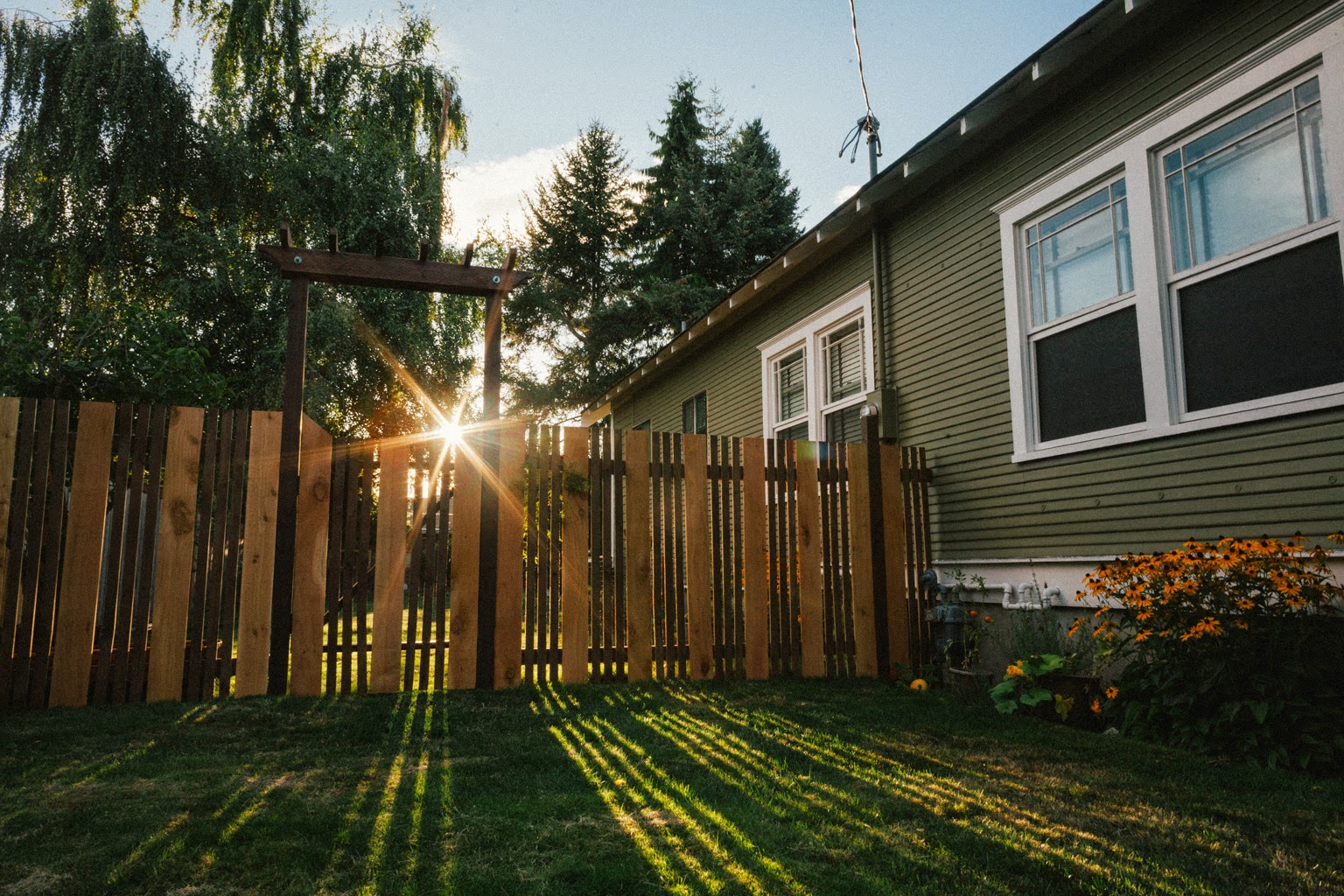
And a fence to start building...


And a ballet recital to record...


And photograph...


And mountains to climb...


... so many mountains to climb...


And so many more mountains to photograph...


And views from high camps underneath summits...


And watching for hours as clouds slipped across glaciers silent as stone...


And more selfies...


Whilst in the space in between I happened to win a pretty big award at work...


Then we went to Colorado to slow down and visit family...


And during the whole summer, coffee (thank God for coffee)...


And more mountains...


And high alpine lakes still snow-covered and ice-bound...


And summits...


... and selfies...


(of course Spivey and Barnie hopped in our packs for every trip)...


And J (always happy to be in the mountains)...


And us (always happy to be in the mountains)...


And driving the old truck (Stuart Q. Wenatchee) down twisty, windy, bumpy, crazy gravel roads...


And cool little coffee shops in small mountain towns...


And two-hundred mile relay races to be run...


And trips to California to our Sierras, small towns and restaurants and film cameras along the way...


And swimming and smiling...


And photographing...


And even more selfies...


And twelve-thousand-foot mountain passes to be crossed...


And tents in which to sleep amongst incredible places...


And books to be read (and coffee in beatup tin mugs to be drunk)...


And more mountain passes to be climbed...


And layers upon layers of mountains to be watched...


And lying on granite rocks in the middle of a barren mountain basin in the middle of the night, completely still, just gazing up into the endless infinity above, silent...


And sunrises from behind fourteen-thousand-foot mountains to greet the day and warm us up...


And fun (endless fun) always to be had...


And Mount Rainier to be climbed...


 And then, a few days later, viewed from amongst the trees much lower with Mom and Dad...


... to sometimes just sit still and gaze up, wondering, at thousand-year-old trees in the middle of an ancient forest...


And a fence to finish...


And eggs to eat...


And one last trip, back to Stehekin and up the river, onto the Pacific Crest Trail, and deeper still into the North Cascades...


And another night in a tent...


And boots to be dried next to a fire...


And the most amazing swiss and bacon pocket from the Stehekin Pastry Company to be grilled over an open campfire flame for breakfast...


And bushwacking (and a bear)...


And trail signs...


And filtered sunlight heading west to our last campsite, and home...


And the river...


And the road...


And miles to go before I sleep... and miles to go before I sleep...